
What Mamdani's Housing Project Means for NYC

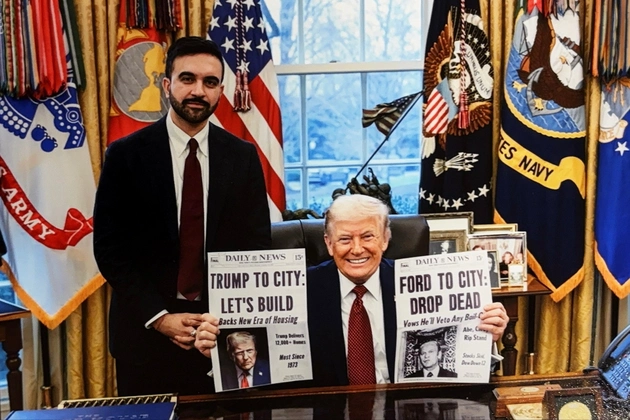
Zohran Mamdani won the mayoral race for New York City on big campaign promises - freezing rents, helping small businesses, and free buses - all of which are to be financed by increasing taxes on the most profitable corporations and the ultra-wealthy one percent of New Yorkers. In his most recent visit to Washington, he made a huge proposal: build over 12,000 affordable housing units over the Sunnyside Rail Yard in Queens.
Background
New York City is one of the most housing-constrained markets in the world. Currently, around two-thirds of New Yorkers are renters, 40% of whom are rent-stabilized tenants. Freezing rents would mean a huge financial burden lifted off the shoulders of many residents.
There is no free lunch, though. Preventing rent hikes for the 40% would increase prices for the rest of the market, as landlords seek to maintain the rate of return promised to investors. Moreover, because residents don’t want to miss out on the cheaper rent, tenants tend to stay longer in affordable units, pushing new renters' demand to the remaining market-rate units. For the rent-stabilized units themselves, costs are still rising, and landlords are starting to cut back on essential repairs and maintenance, explaining the headlines that many units are without working heaters in the winter.
Making the affordability crisis more complex, the city faces budget problems. In the next two-three years, spending is expected to outpace income by $5.4 billion. “There are two paths to bridge the city’s inherited budget gap. The first path is the most sustainable and fairest: raising taxes on the wealthiest and corporations, and ending the drain by fixing the imbalance between what the City provides the State and what we receive in return,” said Mayor Zohran Mamdani. “If we do not go down the first path, the City will be forced to go down a second, more harmful path of property taxes and raiding our reserves — weakening our long-term fiscal footing and placing the onus for resolving this crisis on the backs of working and middle-class New Yorkers. We do not want to have to turn to such drastic measures to balance our budget. But, faced with no other choice, we will be forced to.”
Policy Overview
What is the solution to the city’s problem? Build on the federal government's dime. Mamdani visited President Donald Trump on February 26, 2026 to propose $21 billion in federal grants to construct the world’s largest deck over Sunnyside Rail Yard in Queens, essentially "creating" 180 acres of new land. This would allow the city to build 12,000 new affordable homes, create 30,000 union jobs, while delivering new schools, parks, and hospitals. If this infrastructure development goes into effect, it would be the biggest New York City development in more than 50 years.
The subsidies are necessary because of the economics of affordable housing. Housing is considered affordable when costs do not exceed 30% of a household’s income. Developers of these units often face funding gaps because lower rents mean that projects have lower margins than market-rate projects. Moreover, construction costs often exceed the projected profit in the deal, meaning lenders are only willing to give money to what the projected revenue can cover. To fund this gap in the capital stack, the government gives out tax credits, some of which the developers can sell to fund the construction. In a similar but smaller project of Hudson Yards, a building over the West Side Yard in Midtown Manhattan, the government gave around $4.5 to $6 billion in tax breaks and assistance.
As important as the White House funding the project, though, it also needs Trump to sign off on the deal because Amtrak, a federal entity, owns a majority of the land the potential site sits on. Even with funding in place, without Washington's approval, no one can put shovels in the ground.
What This Means for Investors
With New York City in a budget crisis, potential future unseen construction costs, and the United States fighting a new war in the Middle East, the future of this project is uncertain. However, the goals are very clear for the mayor's office: try to make New York more affordable for the working class. Where does that leave New York’s property market though?
In general, fully affordable housing leaves landlords with increasing costs and flat revenues; not a great investment. However, development and value-add projects with both affordable and market-rate seem more attractive. This allows the firm to take advantage of the tax benefits of the affordable units while gaining from the higher margins of the market rate units. In terms of fully luxury buildings, the potential future income and property tax increase has not seemed to stop developers and buyers. The Naftali Group just closed on 888 Fifth Avenue with projections to sell renovated units at a staggering $11,000 per square foot.
In many ways, the Sunnyside Rail Yard captures the larger story that it is New York City itself: a metropolitan jungle that is constantly trying to reinvent its space to meet growing demand. Building 180 acres over Queens may sound ambitious, but so was the project to build Central Park and Hudson Yards. Whether Mamdani’s plan comes to life will depend on federal support and overall macroeconomic conditions. Yet one thing is certain, without bold solutions, the affordability crisis that defines New York today will only become more severe tomorrow.


